Saturday, June 8, 2013

On My Big Brother Jared Who Turned 31 Last Month


“IT’S NOT GOING TO BE A GIRL!” my older brother Jared inscribed in the back of the baby names book my parents consulted while I was still growing in the womb. Jared was nine and a half years old, the youngest of four and the only boy when my parents announced the pregnancy of their last child. I found my brother’s erroneous prediction when I was old enough to read, and I had a good laugh. I couldn’t blame Jared for wanting a little brother, but that didn’t stop me from taking a black pen and scribbling “OH YES IT IS!!!” right beside his note.

Jared must have recovered relatively quickly after the initial shock of having another sister because I can’t recall a single time that he complained about my gender. If he ever called me annoying, it was usually due to my insistent pleas for his attention. Our mom always said, “Go bug your brother” if I needed something to do after supper, and I never disobeyed that particular command. When I raced down the hall to knock on  Jared’s door, I could usually hear Ozzy Osbourne music blaring from the other side. I hated heavy metal music of any sort, but I knew I could convince my brother to switch the tape to something more mellow, like Elton John or Steve Miller, if or when he let me in. He usually responded to my knock with a hearty “What!?” (pronounced like a dragged out “watt”) and opened the door only because I was too persistent and his homework wasn’t going to get done as long as I kept knocking. 

Once I completed my mission of invading Jared’s personal space, the possibilities seemed practically endless. “Let’s play a game,” I’d suggest. That plan usually fell through unless we settled on Chinese Checkers or Rummikub. Chutes & Ladders wasn’t an option for Jared because it wasn’t a game of skill. With nearly ten years between us, Jared mastered the art of meeting me at my own level while raising me up to his. If I wanted to talk about something childish, he turned it into a philosophical conversation. There was one time when we sat in his room and discussed in length the noises our bodies make, then theorized why kids laugh when they hear the words “bathroom,” “toilet” and “underwear,” while “kitchen” and “oven mitt” produce entirely different effects.

***
Jared was always willing to answer my questions about life matters, but sometimes his answers soared directly over my head and made me even more confused about life. A prime example is the time I asked him to explain the purpose of a belly-button. A simple description of the umbilical chord would have sufficed, but Jared, alarmed at my lack of knowledge, took it upon himself to educate me on sexual reproduction (note: I was six). Before he went into detail, however, Jared wanted to make sure our mom didn’t want to give me “the talk” herself. He sent me out into the family room to ask her how a baby gets inside a mommy’s tummy. Our mom, as expected, kept a level head and told me nothing. I thought babies just materialized in the womb without a cause, but Jared broke the illusion that night when he shut the door and told me everything. While trying to comprehend my brother’s tenth-grade-level explanation, I let myself get distracted by staring at my feet as I dangled them in the air. I used my kindergarten imagination to fill in the gaps and came away from his room that night wondering if my interpretation was at all accurate. My understanding went as follows:

A man and a woman decide they want to have a baby, so they go the hospital. In a special room, the doctor presents the couple with a glass jar containing multiple hollow wands that resemble the stir sticks scientists use to mix chemicals. The man then selects the wand labeled with his last name, heaven forbid he is a Smith or a Johnson, and inserts the device, which contains all the necessary makings of a child, into his wife’s belly-button.

Talk about a “misconception." 

***
Jared was a bit less excited about answering my nonsensical questions, particularly while he was watching sports. Whenever I noticed my brother engrossed in a televised football game while sitting upright on the family room couch, I took my rightful place next to him. I hated sports almost as much as I hated heavy metal, but these couch moments still counted as quality sibling bonding time. Jared probably tried explaining football to me at least twenty different times throughout the years, breaking it down into simple terms, using hand gestures and drawing diagrams, but the information left my head almost as soon as it entered. I was more interested in exercising my creative energy, so I bombarded Jared with “what if” questions to break his concentration.

Me: What if a mom wanted her little boy to play in the game?
Jared: The coach wouldn’t let a little boy play in the NFL. It wouldn’t be safe.
Me: But what if she threatened to sue the coach unless he let her son play?
Jared: (not believing he’s having this conversation) That wouldn’t happen.
Me: But what if it did?
Jared: (slightly enraged) What if the coach brought a live chicken onto the field!?
(I would then erupt into a fit of laughter so uncontrollable that I couldn’t ask any more questions.)

Jared knew how to be creative too, mainly while reading books to me. If I picked a Disney book, he changed all the characters’ names to the names of our sisters, neighbors, and cousins. And if a Sesame Street book was in the stack, he spoke in the appropriate voice for each Muppet (I especially admired his Snuffleupagus impression). Yet, the best stories Jared told me were nonfictional oral accounts of his youth, which he called “Little Jared Stories.” I had two favorites, one being the time that he threw a football into our sister Marnee’s bowl of Rice Krispies and milk splattered all over her face. My other favorite was the time when, at age ten, he tried to stab our sister Melanie’s then-boyfriend with the end of a broomstick and instead put a quarter-sized hole in his bedroom wall. Whether Jared told me these stories to teach me how not to behave as a kid or just to make me laugh, his plan worked.

***
My brother was one of few people who saw me at my loudest since my selective mutism rendered me absolutely silent throughout the school day. No one witnessed my outpouring of energy as frequently as Jared, who often came home from school looking for solitude and a chance to rest his vocal chords. I didn’t know how to talk to the boys my own age, but I could talk my brother’s ear off whether or not he wanted to listen. After tolerating elementary school mayhem all day, it was refreshing to come home and talk to just one person who was more mature, though not yet an adult, and completely separate from my silent world. I was grateful that we never crossed paths during school hours lest my two worlds collided and spawned a cosmic boom. I hardly wondered if my brother’s behavior also differed between school and home, but his strength of character became ever-clear to me over time.

My first revelation occurred when I was shooting hoops in the driveway one afternoon. A teenaged boy, about seven years my senior, rode up the block on his bike and slowed to a stop when he noticed me.

“Are you Jared Schwab’s little sister?” he asked. I nodded my head timidly.

“He’s so cool . . . ” he said in awe before peddling away.

The same exchange with a different teenaged boy took place as I was retrieving a soda from the cooler at a family friend’s graduation party. Both times, I walked away feeling utterly perplexed. My brother was cool? My brother? Were these guys talking about the same Jared Schwab who periodically entered my bedroom with his head shoved into a pillowcase and called himself The Pillow Monster? Who routinely hung me over the banister and acted like he was going to drop me? Who called me "Ytsim" and made "Booger" sound like a term of endearment of the highest sort? I could only fathom one conclusion: these guys didn’t know Jared like I did. 

The sit-coms I watched every day influenced my understanding of American “popular guy” standards, and Jared totally missed the mark. For one thing, his pants always fit. He never listened to pop or rap music, never spiked his hair or wore earrings. He sang louder than anyone in our section of the St. Mary’s congregation at Mass, but never in a rock and roll band. Instead of driving a fancy car, he biked and walked to school. He spent more quality time with our grandma than any of the girls in his class, but he wasn’t ashamed. And he never did anything remotely rebellious, aside from the time when he snuck out of the house to get his head shaved just a couple of weeks before our sister Jenny’s wedding. Clearly, something wasn’t adding up.

Then, I had an epiphany: Jared was athletic. It was a quality in my brother that I often overlooked because, quite frankly, it didn’t matter to me how fast he ran in track or how many touchdowns he made during the football season. While it helped him earn a spot on the Homecoming court, it didn’t effect my opinion of him any more than my extensive Barbie collection influenced his attitude towards me. Our achievements bore no relevance to the strength of our bond. 

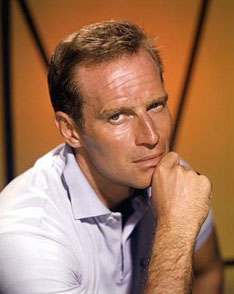
I think the real, underlying reason why people liked my brother so much was because he never let popularity go to his head. He was genuinely friendly to everyone, funny in his own way, resistant to conformity and non-intimidating. Many a mother would have betrothed her daughter to Jared if our culture allowed it, and many an old lady would have traded places with any eighteen-year-old gal to better her chances with the “Charlton Heston look-alike.” Jared enchanted the young and old like a classic MGM musical, and I felt honored to witness his life behind the scenes.

***
After Jared graduated from high school, I was excited when he received his senior yearbook in the mail. Embarrassingly enough, I can probably still name everybody in his class because I flipped through the black and white pages so often. Each senior offered a memory or words of wisdom to correspond with his or her photo, and I was disappointed to discover that my brother chose to take the profound route rather than jotting down something funny like the guy who wrote, “I enjoy frolicking in the meadow.” Jared’s quote read, “Enjoy the journey. Stop and smell the roses. If it goes too slow, don’t try to speed it up.” I thought it was corny at the time, but now I understand the importance of the message. In a society that demands instant gratification, Jared taught me to value the process over the outcome no matter how long it takes to get there. It’s the mentality I used while writing this blog, which is why I’m publishing it nearly a month after Jared’s birthday.

Since I graduated from high school myself, one thing I notice upon my returns to Sleepy Eye is the residents’ ongoing interest in my brother’s whereabouts. Since he’s not very active on Facebook and still doesn’t carry a cell phone, our hometown holds me responsible for providing the necessary updates. Whether I’m sitting in the dentists’ waiting area or standing in line at the grocery store, members of the community eagerly ask me, "What's Jared doing these days?" I try my best to speak only the truth, otherwise rumor might spread that he’s a traveling entertainer who converts audience members’ appendages into musical instruments. For the record, he’s pursuing his teaching certificate so he can become a history teacher, move to a bigger city, and hopefully meet a nice woman who enjoys hiking and recycling. For more information, you can speak to him personally by calling our dad's landline.

Now that Jared and I are both out of high school, though neither of us have permanently left the nest, our relationship has taken on a new level of maturity. For example, I no longer call him "Bonehead"  and he's stopped giving me body slams and snake bites. And If I ask him any questions, they usually relate to nutrition, composting, or exercise. We can talk in length or not at all and feel connected either way. I am grateful to this day to have an older brother as my best male friend in my dominantly female life, even if a small part of him still secretly wishes I’d been a boy.


10 years ago, Jared at 21 and me at 11
Greenwich Village, 1995


Not Jared, but Charlton Heston.
The resemblance really is uncanny.

Tuesday, March 12, 2013

Grief and Gratitude: One Year Later


Today marked one year since my mom passed away, though it feels much longer. Looking back on the past twelve months is comparable to examining two different sides of a record. You can never play both at once- one side is always facing up, ready for the needle to slide along the grooves to produce music. Side A plays songs of joy and gratitude, songs that lift my spirits and keep me grounded. Side B plays songs of grief, songs that slow me down and disconnect me from other people. I listen to the latter side less often as time goes on, but it’s the one I need to describe first.

Side B: Grief

It started with my oldest sister Jenny gently waking me on the morning of March 12th, 2012, a Monday. “Misty, I think it’s the end,” she told me. In spite of hearing these words, I really just wanted to stay in bed because it took me a while to fall asleep the night before. But there were bigger things happening then. I came into the living room where my mom breathed heavily in her hospital bed. My dad and four out of five of my siblings plus my little niece Clara gathered around and watched Mom’s chest rise and fall. Her breathing eventually became so soft that Dad instructed Jenny to turn off the oxygen so he could hear her. When Jenny turned it off, he leaned in and kissed Mom’s forehead, crying more than I ever saw him cry because his wife had just taken her last breath. 

The funeral wasn’t the overwhelmingly emotional experience I envisioned, at least not for me. Instead, the most difficult day of the whole week came on Friday, when Jenny and her family flew back to New York and it seemed as if life was supposed to return to normal. Company filled our house for almost two weeks, expressing sympathy, offering to baby-sit the kids, bringing us meals and saying good-bye to my mom, and the house’s walls seemed to ask, “Now what?” when the rooms became vacant. 

My dad encouraged me to go back to school the following Monday, and I took his advice. Transitioning back to a routine proved easier than I anticipated, mainly because my mom was inactive in my life at college. I took two incompletes because I decided to go easy on myself for the rest of the semester. Writing a paper on the way losing a mother affected Susan Dixon in the short story “Half a Life-time Ago” by Elizabeth Gaskell was a task that I simply couldn’t handle at the time. I included that paper as part of my incomplete after talking to my professor. I finally finished that paper eight months later, once I stopped letting my emotions overrule my ability to concentrate.

When spring semester wrapped up, I moved back home for the summer. Many of my college friends were amazed that I returned to school so quickly after my mom died, but the truth of the matter was that I had yet to truly experience life without her at home. I wrote in my journal on May 6th:

I don’t want to go home, but I know I have to do it. I have this fear that my mom won’t be there, which probably sounds backwards because I already know that she won’t be there. But because she’s still so alive in my head, it hasn’t sunken in yet. When I wake up sometimes, it’s like she’s there in her bathrobe, telling me that she plans on having coffee with friends later in the afternoon. The list of things that will never be the same keeps piling up.

Once I came back to Sleepy Eye, grief caught up to me. The day before Mother’s Day stands out in my mind as one of the most difficult days. I truly sensed my mom’s absence amongst all the relatives gathered in our house when my sisters and I returned from an afternoon out in New Ulm. College was easy because my mom wasn’t supposed to be there anyway, but hearing familiar voices speaking and laughing without my mom’s in the midst of them was unbearable at the time.

Reality hit me in new ways as the year progressed. When I attended a cousin’s wedding later in the summer, it hit me harder than ever that my mom would not walk me down the aisle at my own wedding. Whoever I marry will be without a mother-in-law, and my unborn children missed out on knowing their grandma. But what hit me hardest was recognizing that God makes no duplicates- there will never be another human being who speaks, walks, reasons and behaves exactly as she did. And for a time, it seemed like all the qualities I truly wanted to see in people--selflessness, generosity, optimism, and strength--were attributes that she alone possessed. I grew up under the care of a woman who I considered ordinary until I left the nest and realized that I was in fact raised by a mother of the grandest sort. 

Quite honestly, I've had enough "Grief" for now. It’s time to turn the record over.

Side A: Gratitude

I am grateful that I was there when it happened. For about eight months, it was my greatest fear that my dad would try to call me one night while I was at college to tell me that Mom passed away. Even though it still stings when I relive that moment in my head, when class gets boring, when work gets slow, or when I’m getting ready for the day, I needed to be there. The fact that it happened the first day of my spring break proves that God answered my prayer.

I am grateful that God gave me 20 years with my mom; I would not exchange those 20 years for a lifetime with any other mother. Though there were many, many times when I didn’t see us as a compatible mother/daughter match, I now realize that it took a certain kind of person, someone like her, to show me the specific kind of love I needed to be shown as a child, as a teenager, and as a young adult. I reflect on all the things she did for me and feel nothing less than inspired.

I am grateful that losing my mom, who I always considered my dominant parent, has opened the door for a stronger bond with my dad. The two of us once made up a father/daughter duo who struggled with carrying on two-minute phone conversations, but I gained a new appreciation for my dad after taking late night walks around Sleepy Eye with him and attempting to cook Rice-a-Roni for him on several occasions (he complained that I made the rice too crunchy and finally stopped giving me grief when he burnt the same meal later in the summer). I’ll always remember one night when we passed the cemetery, and he said, “She’s not there, you know. She’s probably walking in between us. Either that, or she’s doing whatever they do “up there”-- giving group hugs and singing “Kumbaya.””

I am grateful that I still have so much to look forward to in my life. This really hit me when I went to see Titanic in 3D with two of my cousins over my Easter break. I was at the point where I just wanted to fast forward through life so I could see my mom again, and then I saw that scene on the ship with Jack and Rose looking out at the water (you know the one I’m talking about) and realized that I couldn’t think about dying yet because I still needed to A) fall in love B) leave the country and C) use my gifts to make the world a better place. Which leads me to my next point...

I am grateful that I can write. It was during my freshman year of college, a point when my future was clouded with uncertainty, that my mom told me she always thought I’d become a famous writer someday. I thought she sounded a bit overconfident at the time, but her prediction sounds less like wishful thinking since I rediscovered my passion for creative writing and screenwriting. Having a creative outlet allows me to collect my experiences, thoughts, and emotions and use them in a unique way.

I am grateful for all the love and support people showed me during the course of this long year. Aside from relatives, there’s my friends from Sleepy Eye, my roommates, the group of girls I ate lunch with every day during my fall semester, the girls in the small group/Bible study I joined at my church, and a few other friends who I typically see one-on-one. It’s such a blessing to connect with people and maintain close friendships.

I am grateful that God gave me so much to be grateful for; the Side A of my record plays on repeat constantly.

Choosing Side A started out as a conscious decision, but it plays automatically now since I rarely flip it over to listen to the alternative. I do still play Side B on occasion, and yesterday was such a day. As easy as it is to play Side A over and over and over, I need to hear Side B because it matters. It’s part of the human experience. If I never played it again, I would be living in denial that it ever effected me. But it’s not so bad anymore. I know in my head that Side A is only a flip away.

Monday, February 11, 2013

Grandma's House


My relatives cleaned out my grandma’s house and sold it a little over a week ago, and I was a little bit bummed that I couldn’t be there to take pictures of all the rooms and relics that brightened my childhood. But it occurred to me that the pastel blue house on 6th Avenue with the Mary statue in front could never be banished from my memory. Without even closing my eyes to block out my current surroundings, I can picture every notable feature of the interior. So with the help of a literary device called imagery, I took a mental walk through Grandma’s house and recorded my findings just in case worse comes to worst I do forget about my second home.

The first thing you might have noticed upon entering Grandma’s living room was an enormous piece of furniture that aligned almost an entire wall. I wish I could label this structure with the correct terminology, but even typing in descriptive words on Google has proved useless. It wasn’t a bookshelf because it had no books, it wasn’t a cupboard because it had no doors (aside from one), and it wasn’t a display case because it had no glass. I guess “storage shelf” comes close, but I would rather refer to it as the Ever-expanding Photo Exhibition, or the EPE for short. Pictures of the individual families occupied the very top of the structure, the last couple of shelves were devoted to my aunts’ and uncles’ wedding photos, and the shelves in between included grandchildren’s senior pictures, baby pictures, grade school pictures (mine being the more awkward than most due to my stoic expressions), sporting pictures, band pictures, prom pictures, homecoming pictures, dance pictures and engagement pictures. Although I only saw some of my cousins in person once every couple of years, I still felt an abiding connection to them since we all contributed to Grandma’s most prized collection of photos.

The wall perpendicular to the EPE showcased the official wedding pictures of Grandma’s eight children, many of them taken at the church altars. The photos were all in color except for my parents’, which had somehow morphed into a prominent shade of green (I used to imagine that my parents caught a rare form of jaundice so extreme that it spread onto their wedding attire and the backdrop of the picture). 

Directly behind the wall of wedding pictures was the kitchen. I should mention that the living room and the kitchen together formed the adult realm during family holidays. Aunts typically gathered around the kitchen table, two lucky uncles sat in Grandma’s rocking recliners, I could usually find my dad in Grandpa’s old chair nearest the door, and the occupants of the couch varied depending on the company. If you found a spot to sit upstairs, whether it was a folding chair or half a couch cushion, you stayed put until a better spot became available. 

The basement was devoted primarily to every generation beneath Grandma and the parents, especially during holidays. I can still hear the “clump, clump, clump” of cousins descending the carpeted steps with plastic cups of 7-Up in one hand and styrofoam plates full of meat, potatoes and at least five kinds of desert (to start) in the other. As cousins began getting married and having kids of their own, the ages of the people gathered around the long table that clogged up the otherwise open space in the rec room spanned from infant to late thirties. 

On the wall across from the steps hung the senior pictures of my mom, my aunt, and the uncles. Judy, my mom, Mike (who was evidently caught the same type of illness that turned my parents green on their wedding day) and Jim formed a diamond on left-hand side, and Steve, Denny, Tom and Jon formed the same shape on the right-hand side. Whenever I tried to list my grandma’s kids from oldest to youngest, this was the wall I envisioned. 

The walls on the opposite side of the room adorned sky views of the home farm, which now belongs to my uncle Tom. The men in the family typically occupied this side of the room while watching sporting events on Grandma’s out-dated television set, which doubled as a platform for her own children’s black and white baby photos and the cardboard manger scene at Christmastime. Glittery white felt lied across the top to look like snow and plastic camels with missing legs carried the Magi. Grandma liked to have her Christmas decorations in the same spots every year, and my cousin Becky and I were assigned to the task of making sure everything was in the right place.

In the corner opposite the television was the controversial lamp, the one nobody ever turned on because it meant drawing attention to the “exposed” woman figure who was encaged, along with the lightbulb, in a cylindrical container made of taut strings connecting the top to the base. Grandma told us it was an anniversary gift, and it always made my cousins and I giggle when we were too young to understand the concept of nude art. 

On the floor somewhere near the aforementioned lamp was a home-made Easter bunny. The bunny’s stomach, made from a glass jar, contained a large helping of jelly beans that my cousin Emily and I sampled roughly ten years after Grandma received the gift (we regretted our decision immediately following the intake, as I recall).

Underneath the couch (the one reserved for cousins who were neither eating nor watching the game, but attempting to have one-on-one conversations which were usually interrupted by children who wanted to utilize the cushions as a trampoline) was a “boy game” called Last Chance. I for one never completely understood the real object of the game, but three generations of relatives chased each other around with the red and blue plastic guns and spent hours searching for the ammo- little metal marbles that entered the mouth regions of nearly every grandchild and great-grandchild at least once. 

The laundry room was an addition to the basement that I found particularly enchanting as a child, perhaps because it allowed me to focus on two or three cousins at a time rather than trying to register multiple conversations happening in every area of the rec room. There were two mattresses shoved between a neglected couch and the wall, and about three kids could squeeze between them for the makings of a life-size Whack-a-Mole game. My cousins and I popped up our heads and tried to sink back down between the mattresses before getting bopped. 

Grandchildren rushed upstairs for one of three reasons: 1) to get more food 2) to retrieve a game like Cranium or Taboo from the coat room (Grandma’s bedroom) or 3) to open Christmas presents. And parents came downstairs only to inform their children that it was time to leave. My cousins and I eventually learned from experience that “it’s time to leave” didn’t mean “we are leaving now” but rather “we are aiming to at least get our shoes and coats on in the next half an hour.” My dad married into the family forty-one years ago and dated my mom for five years before that, but he never grew truly accustomed to the signature “Guldan good-bye.” I can still picture him standing in the kitchen, coat and shoes on, holding a container of cookies he didn’t bake, waiting for my mom to finish telling a story about the time my older brother tried to kayak around the entire lake. As a kid, I didn’t mind the wait. Even when my cousins and I grew older and less captivated by hide-and-seek, Fischer Price Little People (not the chunky plastic ones you see in stores today but the original wooden ones lacking in appendages), Spirographs and rock-solid Play Doh, we still delighted in reminiscing about the days when Grandma’s house was fun.

Even though my family lived only a block away from Grandma while the others lived either in the country, in New Ulm, or out of state, I never paid her a visit on my own until the summer after my mom died. I went for a walk around the block and almost passed the pastel blue house with the Mary statue in front, but I stopped to consider a few things. My grandma lived alone, she lost her daughter less than three months earlier, and she herself was getting older and wouldn’t always live in that house. Not only that, but I wouldn’t always be living in Sleepy Eye with the opportunity to visit her every day if I so chose. So I rang her doorbell and saw her face light up when she answered. We looked through her cedar chest, one of the few objects in her house that I never thoroughly explored, and she showed me her wedding dress (which cost $14.95) and my mom’s baby book. I visited Grandma a couple of times a week after that day and I’m sure I would regret it if I hadn’t. 

It amazes me that the main Guldan gathering spot, however small, is no longer accessible to our family. My grandma is much happier in the nursing home, and we’re all relieved that she’s in good care. When I imagined life without Grandma’s house a couple of years back, I anticipated an overwhelming amount of nostalgia flooding my mind. But when you learn to let go of bigger things, like people, a house seems so much less valuable. The tangibleness of the place will live long in my memory, but in the end it was all about the unseen Spirit that lingered through the rooms, uniting us in love.